Showing posts with label Leadership. Show all posts

Monday, October 4, 2010

Approval vs. Respect

In the The Tao Te Ching, roughly translatable as The Book of the Way and its Virtue (written around 600 BC),  Taoist sage Laozi dispenses a simple bit of wisdom: “Care about people's approval and you will be their prisoner.”  These are strong words about a human tendency we all need to guard against.

In business, we sometimes forget that respect is much more important than approval. There is a kid inside all of us and when someone in authority or influence approves of us, we feel good.  Perhaps we made a good decision or hit an important goal.  That is human, positive, and understandable.

Unfortunately approval can also be addictive.  In an attempt to get that “approval rush,” some executives find themselves looking for ways to “score points” with those around them.  It becomes their singular purpose.

While this approval seeking may reduce insecurity, it actually results in a loss of power.  External approval becomes the only way to feel good; plans, actions, and decisions become consciously or unconsciously biased towards securing that approval.  High stress situations usually make this tendency worse.

Respect is different.  Respect is about having the internal fortitude to feel good about your leadership, even when others in power positions disagree with you.  It is about being held in high regard because of your innate abilities, overall track record, and courage.  It is paradoxical that when you stop caring about approval, respect often increases.

Approval seeking is normal.  It has been with all of us since we were children. Don’t underestimate its allure; it can creep in unnoticed and brutal honesty is the only antidote. 

By questioning your motivations regarding a given course of action, and testing your true objectives against real business priorities, you can avoid the “approval trap.”   By doing so you'll be able to stand behind all of your decisions--regardless of what others may think-- because that is what true leadership is all about!

To your success, 

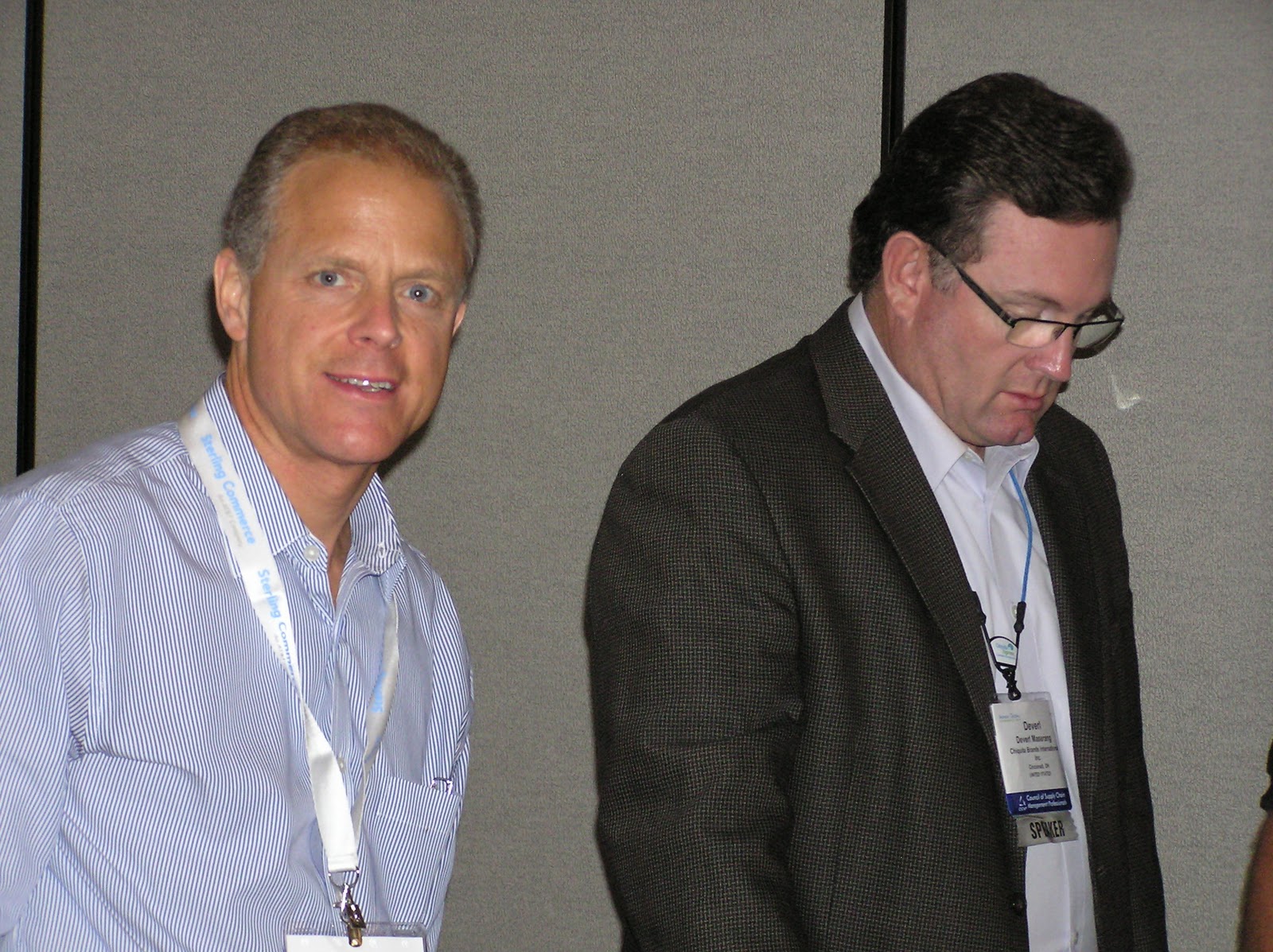
Highlight photos from the CSCMP Annual Global Conference in San Diego - September 26 and 27 2010

Highlight photos from my appearance at the the
CSCMP Annual Globla Conference in San Diego

September 26 and 27, 2010


Tuesday, August 24, 2010

Taking Inventory to keep the ego in balance


On August 7, 2010, Mark Hurd, the former CEO of Hewlett Packard resigned amidst a cloud of questions regarding his relationship with a female vendor and a clear-cut accusation of cheating on his expense report.  Here is a guy who by most any visible measure, hit the cover off the ball at HP.  On his watch, the Palo Alto, California-based company regained leadership in the PC market from Dell Inc. and used acquisitions to expand into new areas, such as computer services.  The company’s stock-market value increased $44.6 billion--rising to $108.1 billion since Hurd took the helm on April 1, 2005.   

How could he let this happen?  We will never know the whole truth but extremely poor judgment is the reason we have read about in the papers and from Hurd himself.  All too often these days, we have seen many cases of extremely successful people falling from grace (more like crashing) due to “poor judgment.”   However, that explanation is too simplistic, too pat and just too easy.  It makes the infraction sound lack a simple oversight or what we all like to call these days a case of “brain freeze.”

I don’t believe any of these descriptions really get to the heart of the matter:  out-of-control ego.  I’m not interested in getting into a deeply psychological treatment of ego.  Rather,  just consider the picture you have in your mind when you describe someone as egotistic and/or self-centered.   It isn’t pretty. 

Hurd situation falls into this latter category.  Why would Mark Hurd, with all he had going for him, take these kinds of risks?  How about this hypothesis:  his egotism convinced him that he wasn’t taking risks at all.  He was above risk.  His rewards ( he reportedly earned $42 million in 2008 and $24 million in 2009) and position power became proof enough that  he really was “that good”.   He believed his own press. 

Leaders of large corporations have big responsibilities and large burdens.  Leading at the top of any organization is not easy.   It is a highly consuming job where your personal and professional life become fused;  you are often engaged 24/7 in leading your organization.  However, the rewards for these burdens are high.   You can become incredibly wealthy and have wide influence over decisions that most people can only view from the sidelines.   If you are great CEO, you are worth the money you are paid.    However, your compensation shouldn’t be just about rewarding the stockholders;  it must also be a measure of your character as a leader.   Believe it, character still matters, even though recent events might say otherwise.

Strong leaders maintain a balanced view of themselves.  They recognize how fortunate they are to have achieved a significant degree of success in their professional lives. They are also humbled by their obligations and responsibilities.  While  they often  highly confident, demanding, and driven, they work hard to keep their egos in check.   This humility acts an antidote to ego inflation.  It is a safeguard against the kind of ego driven self-deception that launched Mark Hurd from HP.  I would suggest that all of us ask a few questions of ourselves to gauge the health of our own egos:
  1. Am I truly thankful for the things I have, intellectually, emotionally, and spiritually?
  2. Do I recognize that in many ways, my success isn’t the result of JUST me?  For instance, was  I born into good circumstances?  I also received indispensable  help from others. 
  3. Do I express frequent appreciation to others for their contribution to my success?
  4. Am I a genuine, high values role model?

This inventory is a simple way to keep our egos in balance.  If all of us in business earnestly asked the above questions every day, there is no doubt that we would create more value for everyone.  The world would be a better place.